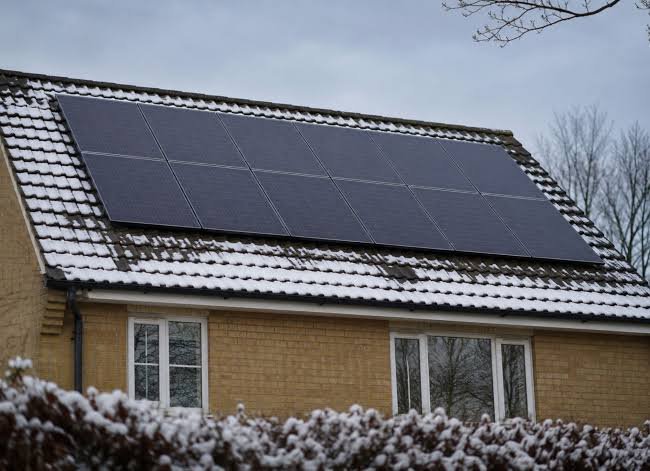
It’s one of the first things people say when we mention solar in Scotland. “What about winter?” It’s a fair question. December days are short, the sun barely clears the rooftops, and cloud cover is a near-permanent feature of life north of the border.
So here’s the honest answer.
Yes — but you need to understand what “working” means
Solar panels generate electricity from daylight, not heat or direct sunshine. On a cold, clear January day in Scotland, panels can produce meaningful output. On a dull, grey December day with only 6 hours of daylight, output will be low.
The important word is low, not zero. Scottish weather isn’t uniformly dark for six months. There are clear winter days, and panels perform well on them — often better than you’d expect, because cold temperatures actually improve panel efficiency slightly compared to hot summer days.
What the numbers look like
A 4kW system in central Scotland generates roughly 3,500–4,000 kWh per year across all seasons. The seasonal split looks something like this:
- Spring and autumn: strong output, long usable hours
- Summer: highest daily output, longest days
- Winter: lowest output, but still generating across daylight hours
In December and January, a 4kW system might produce 200–300 kWh for the month. That’s not nothing — it’s still offsetting a portion of your electricity use.
Why battery storage changes the winter picture
The real issue with solar in winter isn’t that panels don’t work. It’s that your demand is higher (more lighting, heating, appliances) while your generation is lower. Without a battery, that gap is entirely filled by grid electricity.
With a battery — and a smart overnight tariff like Octopus Go — you charge the battery cheaply from the grid at night (as low as 7p per unit) and use that stored electricity during the day. This strategy works year-round, but it’s particularly valuable in winter when solar generation alone won’t cover your daytime demand.
The combination of solar, battery, and a cheap overnight tariff is how our customers maintain significant savings even through the darkest months.
Panel choice matters in Scotland
Not all panels perform equally well in low-light conditions. This is one of the reasons we install Jinko Solar Tiger Neo III panels — their N-type TOPCon cell technology is specifically recognised for strong low-light performance. They generate proportionally more output on overcast days than older PERC technology.
If an installer offers you panels without discussing low-light performance, it’s worth asking about it.
The year-round economics still work
When we model payback periods, we use Scottish irradiance data — not south-of-England figures. The projections account for the shorter winter days and higher cloud cover. Even with that baked in, most of our customers see payback in 7–10 years and annual savings of £1,500–£2,500.
Winter generation is lower, but it’s one quarter of the year. The other nine months more than compensate.
What to ask any installer
- What generation estimate are you using, and is it based on Scottish data?
- What panels are you using and how do they perform in low-light conditions?
- Have you factored in battery overnight charging to your savings projection?
If they can’t answer those questions clearly, keep looking.